

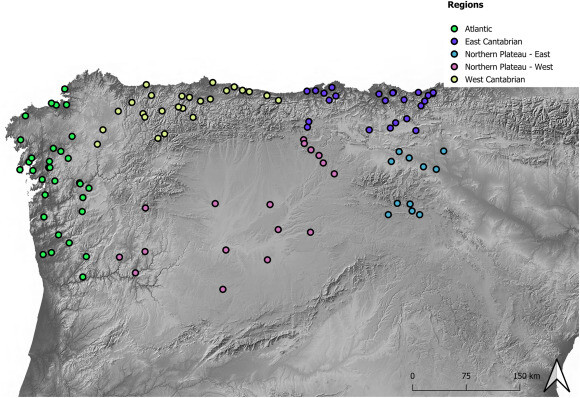
Around 2,400 years ago, the northern Iberian settlements in what is now Galicia, Asturias, and Cantabria were abandoned in a remarkably short period—roughly a century. This mass departure, which began in the western Cantabrian region between the late 6th and early 5th centuries BC, has long puzzled archaeologists. Now, a new study published in the Journal of Archaeological Science by Samuel Nión-Álvarez of INCIPIT-CSIC offers fresh answers to this ancient mystery.
What Happened to the Northern Iberian Settlements?
According to Nión-Álvarez, the abandonment was part of a broader “turning point” that swept across Europe around 400 BC during the Iron Age. Communities experienced a “paradigm shift in their way of life”—an abrupt transformation that remains one of the most significant yet least understood events in European prehistory.
Find Original Home Decor sparking conversation at Grand Goldman Shop.

The phenomenon started in the western Cantabrian zone between the late 6th and early 5th centuries BC. By the 4th century BC, new settlements began to appear, but they were different: more fortified and located at higher elevations. This suggests a deliberate move toward defensible, strategic positions.
Why Did These Settlements Vanish?
The exact causes are still debated, but the study points to a combination of factors. The shift was not isolated to Iberia; similar abandonments occurred in other parts of Europe. However, the speed and scale in northern Iberia make it particularly striking.
Nión-Álvarez describes it as a “change of paradigm” that affected social organization, settlement patterns, and daily life. While the article does not specify a single trigger, it emphasizes that the transformation was abrupt and widespread, likely driven by interconnected social, economic, and environmental pressures.
What the New Study Reveals
The research synthesizes archaeological data to paint a clearer picture of this transition. It highlights that the abandonment was not a gradual decline but a rapid reorganization. The new settlements that emerged in the 4th century BC were more defensible, indicating a need for protection or a shift in power dynamics.
This aligns with broader European trends where communities moved to hillforts and other fortified sites. The study underscores that the northern Iberian case is a key piece in understanding Iron Age Europe. The longer history behind the story is traced in Codex H Recovered: 42 Lost Pages of the New Testament.
Key Takeaways from the Research
- The abandonment occurred between the late 6th and early 5th centuries BC in the western Cantabrian region.
- By the 4th century BC, new settlements were founded, characterized by fortifications and higher elevations.
- The phenomenon was part of a wider European “turning point” around 400 BC.
- The study calls it one of the most significant but least understood events in European prehistory.
- Researchers like Nión-Álvarez are using archaeological evidence to uncover the causes and consequences.
Comparison of Settlement Characteristics
| Feature | Before Abandonment (6th-5th c. BC) | After Abandonment (4th c. BC) |
|---|---|---|
| Location | Lower elevations, open areas | Higher elevations, fortified |
| Defensibility | Low | High |
| Social Organization | Unknown, likely dispersed | More centralized, defensive |
| Timeframe | Until late 6th c. BC | From 4th c. BC onward |
The table summarizes the shift from open, lower-elevation settlements to fortified, high-elevation sites. This change reflects a broader transformation in how communities responded to their environment and each other. The background to this story is set out in Ancient Carved Stones in Southwest Iberia Finally Explained by Huelva. A related thread runs through Lead Smelting in Iberia Began 900 Years Before Phoenicians. Earlier coverage in Archaeologists Uncover Ancient Secrets on the Cíes Islands shows how the argument developed.
What to Watch Next
Future research will likely focus on uncovering the specific triggers—whether climate, conflict, or social upheaval—that drove this rapid abandonment. Nión-Álvarez's work sets the stage for more detailed investigations into the daily lives of these Iron Age communities and their resilience in the face of change. A closer look at the same subject appears in Cantabrian Brown Bear Expands Across Northwest Iberia Despite Debate. Anyone following the wider picture can start with Alarcos Excavation Reveals Major Archaeological Discovery in Spain. The same theme surfaces in Herculaneum Papyri: How Archaeologists Can Now Read Them, which takes a different angle.
As archaeologists continue to dig, the story of these vanished settlements offers valuable lessons about how societies adapt to crises. The answers may lie in the soil of northern Iberia, waiting to be unearthed. Context on how this played out before sits in Fiji's Tiny Island Made of Shells Is an Archaeological Find. A companion piece, Iberian Lynx Spotted in Basque Country After a Century, approaches the same subject from another angle.
FAQ
When did the northern Iberian settlements disappear?
The abandonment began between the late 6th and early 5th centuries BC and was largely complete by the 4th century BC, when new settlements were founded.
Why were the new settlements fortified?
The study suggests that the shift to fortified, higher-elevation sites indicates a need for defense or a response to increased conflict or social instability.
Was this phenomenon unique to northern Iberia?
No, it was part of a broader European trend around 400 BC, but the speed and scale in northern Iberia make it particularly notable.
What is the significance of this study?
It provides a synthesis of archaeological evidence, helping to explain one of the most significant yet least understood transitions in European prehistory.







