

China's latest megaproject, an artificial island airport in Dalian, showcases the country's engineering prowess but also raises non-technical challenges. The Dalian Jinzhouwan International Airport is being built on a 20.1 km² artificial island in Jinzhou Bay, about three kilometers off the coast. While the engineering is impressive, the project faces hurdles beyond construction.
China's Engineering Marvels and the New Airport
China has a long history of ambitious infrastructure projects, from the Three Gorges Dam to the Hong Kong-Zhuhai-Macao Bridge. The Dalian Jinzhouwan airport continues this tradition, pushing the boundaries of what's possible. The project involves creating a massive artificial island and building a state-of-the-art airport on it.
Find Original Home Decor sparking conversation at Grand Goldman Shop.

Project Overview: Dalian Jinzhouwan International Airport
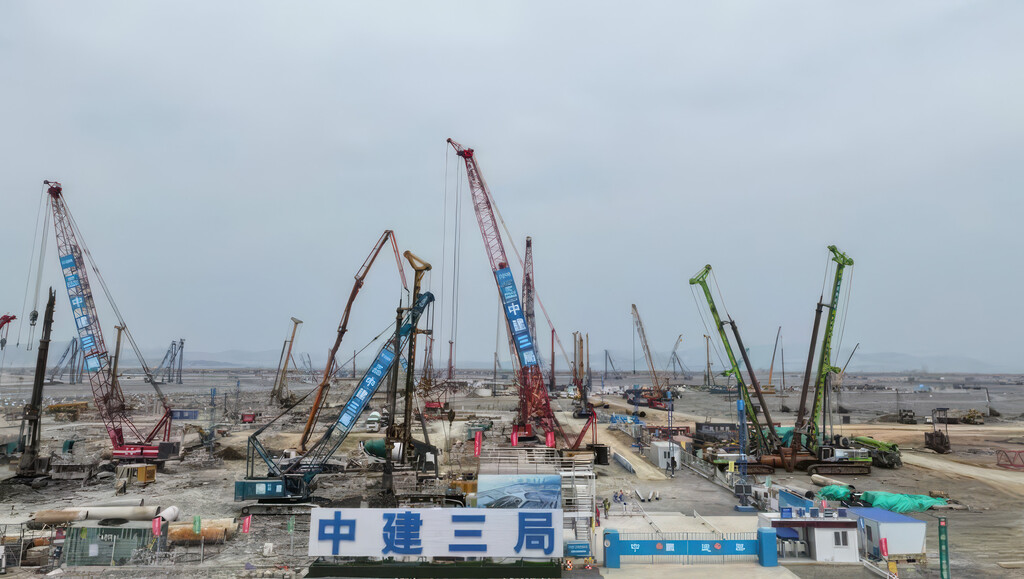
The airport is located in Dalian, a port city in northeastern China. The first phase includes a 500,000 m² terminal, a 3,600-meter north runway, and a 3,400-meter south runway. Additional facilities for cargo, maintenance, and airport operations are also planned. The scale is enormous, but the project is still under construction, with progress in 2026 showing key elements emerging. The background to this story is set out in China Builds 607-Hectare Artificial Island in South China Sea. A related thread runs through Edinburgh International Film Festival Showcases Scottish Film Industry. Earlier coverage in Science: latest articles shows how the argument developed.
Engineering Challenges and Solutions
Building on an artificial island presents unique engineering challenges. The island must be stable enough to support heavy infrastructure, and the airport must be designed to withstand harsh weather conditions. These technical aspects are being addressed with advanced engineering solutions, but they are not the only concerns. A closer look at the same subject appears in China's New Naval Monster: The Semi-Submersible Crane That Sinks to Work. Anyone following the wider picture can start with China's New Tantalum Alloy Withstands 2,400°C Loads. The same theme surfaces in Swiss Alps Tunnel Infrastructure: How Underground Engineering Solved, which takes a different angle.
Non-Technical Challenges: Environmental and Economic Considerations
Beyond engineering, the project faces environmental and economic challenges. The construction of an artificial island can impact marine ecosystems, and the airport's economic viability depends on future air traffic demand. These factors add layers of complexity to the megaproject. Context on how this played out before sits in China's Type 004 Aircraft Carrier: A Technological Leap at Dalian Shipyard. A companion piece, China's Artificial Island Airport: Engineering and Beyond, approaches the same subject from another angle.
Key Takeaways
- The Dalian Jinzhouwan airport is being built on a 20.1 km² artificial island.
- The first phase includes a 500,000 m² terminal and two runways.
- Engineering challenges are being addressed, but environmental and economic concerns remain.
- The project reflects China's continued investment in large-scale infrastructure.
Comparison of Airport Features
| Feature | Specification |
|---|---|
| Artificial island area | 20.1 km² |
| Terminal area (phase 1) | 500,000 m² |
| North runway length | 3,600 m |
| South runway length | 3,400 m |
FAQ
What is the Dalian Jinzhouwan International Airport?
It is a new airport being built on an artificial island in Dalian, China. The first phase includes a large terminal and two runways.
Why build an airport on an artificial island?
Building on an artificial island allows for expansion without using valuable mainland space, and it can reduce noise pollution for nearby residents.
What are the main challenges of this project?
The main challenges include engineering difficulties of building on reclaimed land, environmental impacts on marine life, and ensuring economic viability.
When will the airport be completed?
The project is still under construction, with progress in 2026 showing key elements emerging. A completion date has not been announced.







