

Spain's firefighting donkeys are emerging as an unexpected but effective tool in the fight against wildfires. As forests expand and resources for prevention dwindle, these animals are stepping in to help manage the landscape and reduce fire risk.
In recent decades, firefighting has been reinforced with drones, satellites, and AI-powered cameras. However, in some regions of Spain, a simpler and more effective solution is being tested: the "firefighting donkeys." As fire becomes a first-order problem, devastating hectares of forest and populated areas, more and more parts of the country see herds of equines as valuable allies against the flames.
Find Original Home Decor sparking conversation at Grand Goldman Shop.

What Are Firefighting Donkeys?
Firefighting donkeys are not used to carry water drums, shovels, or hoses. Instead, their role is to keep forests healthy by grazing on undergrowth, thereby preventing wildfires from spreading uncontrollably. Their function is so important that some already use the term "firefighting donkeys" as a powerful way to claim their role.
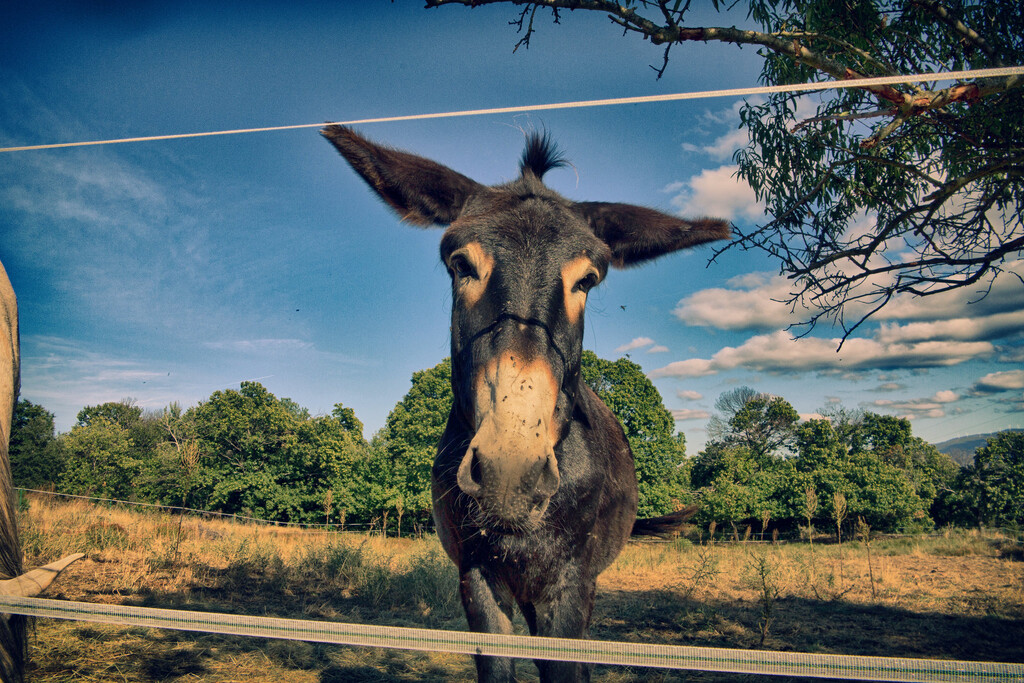
What do they do exactly? They graze. They give free rein to their voracious and insatiable appetite. It may not seem like much, but when groups of dozens of donkeys advance in herds across hectares of forest, feeding on grasses and shrubs, their effect is crucial.
How Do Donkeys Help Prevent Wildfires?
Their "crews" help keep fields clean, which, in the event of a fire, makes it harder for flames to find fuel to feed and spread. As the fire advances, the lack of undergrowth slows its progress, giving firefighters more time to respond.
This method, known as silvopasture, combines forestry and livestock grazing. It not only reduces fire risk but also promotes biodiversity and maintains traditional landscapes. Donkeys are particularly effective because they can access steep and rugged terrain that machinery cannot reach.
- Reduces fuel load: Donkeys eat dry grass and shrubs that would otherwise act as tinder.
- Cost-effective: Maintaining a herd of donkeys is cheaper than mechanical clearing.
- Eco-friendly: No fossil fuels or chemicals are used, and the animals fertilize the soil naturally.
- Preserves rural heritage: The practice supports traditional farming and keeps rural areas populated.
- Promotes biodiversity: Grazing creates varied habitats that benefit many species.
Why Is This Solution Gaining Traction in Spain?
Spain has seen an increase in forested areas due to rural depopulation and the abandonment of traditional agriculture. At the same time, resources for fire prevention have not kept pace. This has led to a buildup of vegetation that fuels increasingly severe fires.
In this context, firefighting donkeys offer a low-cost, sustainable solution. Local governments and environmental groups are increasingly supporting initiatives that reintroduce donkeys into the landscape. The animals not only reduce fire risk but also help maintain open landscapes that are valued for their cultural and ecological significance.
| Method | Cost | Environmental Impact | Effectiveness |
|---|---|---|---|
| Mechanical clearing | High | Fossil fuel use, soil disturbance | Quick but temporary |
| Controlled burns | Medium | Air pollution, risk of escape | Effective but risky |
| Firefighting donkeys | Low | Positive: fertilizes soil, promotes biodiversity | Continuous, sustainable |
What Are the Challenges?
Despite their benefits, firefighting donkeys are not a silver bullet. They require proper management to ensure they graze in the right areas and do not overgraze sensitive habitats. There are also concerns about predators and the need for fencing or shepherding.
Furthermore, the scale of the problem is immense. Spain has millions of hectares of forest, and donkeys alone cannot manage it all. They are most effective in strategic locations, such as around villages and along firebreaks, where their impact can be maximized. The background to this story is set out in Spain Wildfires 2026: Record 265,000 Hectares Burned. A related thread runs through Spain's Summer Wildfires Expose Gaps in Prevention Rules. Earlier coverage in France and Spain Wildfires: Evacuations Exceed 250,000 shows how the argument developed.
What to Watch Next
As Spain grapples with the increasing threat of wildfires, the use of firefighting donkeys is likely to expand. Pilot projects are already showing promising results, and more regions are expected to adopt the practice. Keep an eye on policy developments and funding for silvopasture initiatives. A closer look at the same subject appears in Disposable Barbecue Ban Urged to Prevent Wildfire Risks. Anyone following the wider picture can start with UK Wildfires: Inside the Push to Map, Predict and Prevent Spread. The same theme surfaces in Disposable Barbecue Ban: UK Wildfire Prevention Measures, which takes a different angle.
Ultimately, the firefighting donkeys represent a return to nature-based solutions that are both effective and sustainable. They remind us that sometimes the simplest answers are the best. Context on how this played out before sits in Wildfire Emergency Alert: UK Safety Risks and Prevention. A companion piece, Wildfire Emergency Alert UK: Safety Steps and Fire Prevention, approaches the same subject from another angle.
FAQ
What are firefighting donkeys?
Firefighting donkeys are herds of donkeys used to graze on underbrush in forests to reduce the risk of wildfires. By eating dry grass and shrubs, they remove fuel that would otherwise help fires spread.
How effective are donkeys at preventing wildfires?
Donkeys are highly effective at reducing fuel loads in the areas they graze. Their continuous grazing keeps vegetation low and creates firebreaks. However, they are not a standalone solution and work best as part of a broader fire management strategy.
Why is Spain using donkeys for fire prevention?
Spain has seen an increase in forested areas due to rural depopulation, while resources for fire prevention have not kept pace. Donkeys offer a low-cost, sustainable way to manage vegetation and reduce fire risk.
Are there any drawbacks to using donkeys for fire prevention?
Yes, donkeys require proper management to avoid overgrazing and to protect them from predators. They also cannot cover vast areas alone, so they are most effective when strategically placed.
Browse the Shop
 Acacia frida deluxe solid wood bed frame |
Bedroom bench |
Bed chest drawers |
Lingerie dresser |
Frame base |
Mirror with jewelry storage |
30 Bathroom Vanity |
Memory foam queen mattress |
Mattresses for back pain |
Nightstand set of 2 |
Grand Goldman Shop |
Civil Lawyer
Deutschland Trikot WM 2026







