

The Codex H, a 6th-century manuscript of the Letters of St. Paul, was long thought lost after being dismantled in the 13th century. Now, researchers have recovered 42 new pages, offering a rare glimpse into early Christian textual history.
This discovery sheds light on how the New Testament was transmitted and organized in the early Middle Ages. It also highlights the power of modern science to recover cultural heritage from seemingly destroyed artifacts.
Find Original Home Decor sparking conversation at Grand Goldman Shop.

What Is Codex H and Why Does It Matter?
Codex H is a Greek manuscript dating to the 6th century AD, containing a copy of the Pauline Epistles. What makes it exceptionally valuable is its antiquity: it was produced only a few centuries after Paul himself wrote his letters in the 1st century.
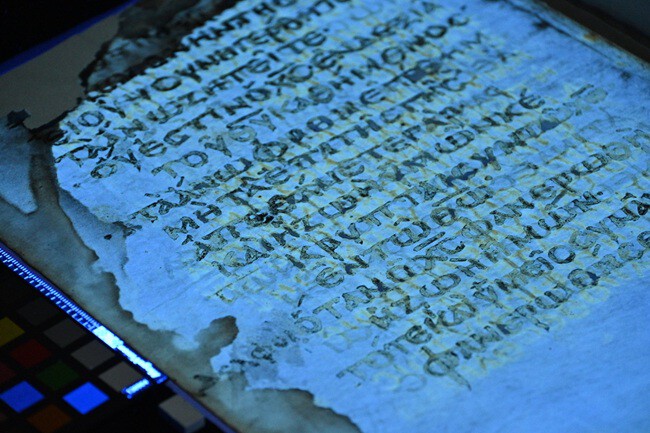
For scholars of the New Testament, this offers a crucial window into how the epistles were compiled and arranged in early medieval times. The manuscript is also the oldest known example of the Euthalian Apparatus, a system of divisions and annotations used to organize the New Testament text.
The Irony of Codex H: Dismantled for Parchment
Despite its immense value, Codex H met an ironic fate. In the 13th century, monks at the Great Lavra Monastery in Greece decided to disassemble it to reuse its parchment for other works.
Parchment was scarce, and recycling was common—even if it meant destroying a manuscript that was already over 400 years old. Historians had long assumed its contents were lost forever.
How Were the 42 Pages Recovered?
Using advanced scientific techniques, researchers have now rescued more than 40 pages of the original codex. These pages were likely erased and overwritten, a practice that created palimpsests—manuscripts where the original text is scraped away and replaced.
Modern imaging technology can reveal the faint traces of the underlying text, allowing scholars to reconstruct the lost content. This recovery is a testament to how science can unlock history that was thought irretrievable.
Key Takeaways
- Codex H is a 6th-century Greek manuscript of Paul's letters, valuable for its age and its witness to the Euthalian Apparatus.
- It was dismantled in the 13th century by monks at the Great Lavra Monastery to reuse its parchment.
- Researchers have now recovered 42 pages using scientific imaging techniques.
- The recovery provides new insights into the transmission and organization of the New Testament.
- This find underscores the importance of preserving and studying palimpsests.
Why This Discovery Matters for Biblical Scholarship
The recovery of Codex H pages offers scholars a rare opportunity to examine an early copy of the Pauline Epistles. It can help trace how the text was edited, annotated, and used in worship and study. The longer history behind the story is traced in Codex H Recovered: 42 Lost Pages of the New Testament.
Moreover, the Euthalian Apparatus in Codex H provides evidence of early attempts to structure the New Testament for reading and interpretation. This can illuminate the development of Christian liturgy and scholarship. The background to this story is set out in David Film Review: Biblical Animation Musical with Boyband Charm. A related thread runs through David Review: Biblical Animation Musical with Boyband Charm. Earlier coverage in Trending: latest articles shows how the argument developed.
Comparison of Manuscript Features
| Feature | Codex H | Typical New Testament Manuscripts |
|---|---|---|
| Date | 6th century | Varies (2nd–15th century) |
| Content | Pauline Epistles | Gospels, Acts, Epistles, Revelation |
| Notable Feature | Oldest Euthalian Apparatus | Usually without apparatus |
| Survival | Dismantled, partially recovered | Often intact or fragmentary |
What to Watch Next
Further analysis of the recovered pages may reveal more about the text's history and the practices of the monastery that dismantled it. Scholars will likely compare the text with other manuscripts to trace variants. A closer look at the same subject appears in Why Northern Iberian Settlements Vanished 2,400 Years Ago. Anyone following the wider picture can start with Sweden Tunnel Dig Unearths Six Centuries-Old Shipwrecks. The same theme surfaces in Ancient Clay Figurines Reveal Children's Crafts 15,000 Years Ago, which takes a different angle.
The story of Codex H also serves as a reminder of the fragility of ancient texts and the importance of digital preservation efforts. As technology advances, more lost works may be brought back to light. Context on how this played out before sits in Spain's Wildlife Comeback: Wolves, Bears, and Lynx Spark Rural Conflict. A companion piece, SpaceX Starship Flight 15: Ship Captured, 26 Satellites Deployed, approaches the same subject from another angle.
FAQ
What is Codex H?
Codex H is a 6th-century Greek manuscript containing the Letters of St. Paul. It is notable for being one of the earliest copies and for featuring the Euthalian Apparatus.
Why was Codex H dismantled?
In the 13th century, monks at the Great Lavra Monastery disassembled it to reuse its parchment due to scarcity. This practice was common but resulted in the loss of many ancient texts.
How were the pages recovered?
Researchers used scientific imaging techniques to recover text from palimpsests—parchment that had been erased and reused. This allowed them to reconstruct 42 pages.
What is the Euthalian Apparatus?
The Euthalian Apparatus is a system of divisions and annotations for the New Testament, created to help readers navigate and understand the text. Codex H contains the oldest known example.







