

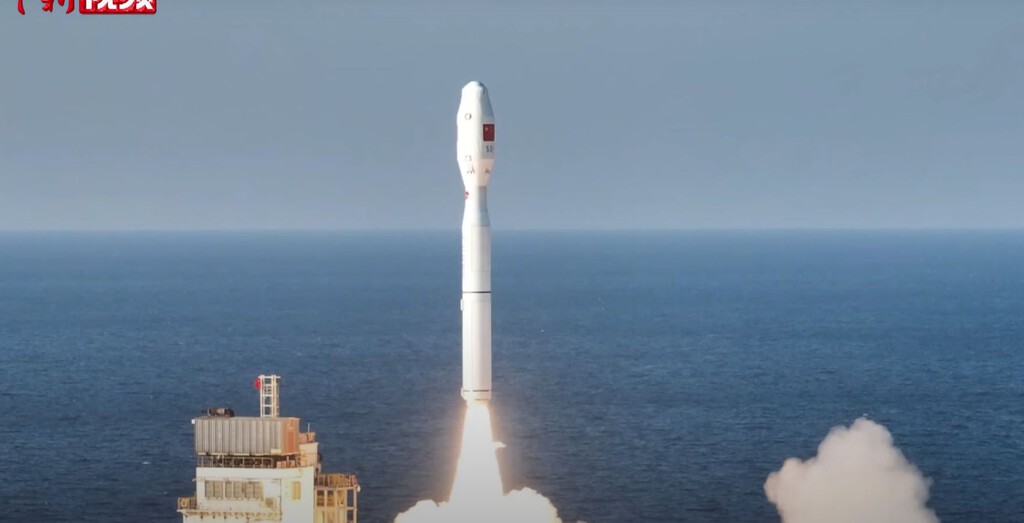
China is set to perform its first rocket launch from open waters on April 18, using a modified ship as a sea launch platform for the Jielong-3 rocket. This move directly addresses the growing bottleneck in global space launch capacity.
The vessel, named Dong Fang Hang Tian Gang, measures 162 meters long and 40 meters wide. It will carry the 31-meter Jielong-3 rocket, designed by the China Academy of Launch Vehicle Technology for commercial missions. The launch will take place from the South China Sea, marking the first time China has attempted a sea launch from open waters.
Find Original Home Decor sparking conversation at Grand Goldman Shop.

Why China Is Turning to Sea Launches
China's decision to launch from the sea is driven by several pressing issues. The primary motivation is the saturation of conventional land-based launch pads. The boom in the satellite industry—for telecommunications and other applications—has led to a surge in scheduled launches worldwide.
As a result, new launches face long waiting lists. Launch windows are often limited, and delays can cascade. Sea launch platforms offer a way to bypass these bottlenecks by providing additional, flexible launch sites.
Moreover, sea launches can place rockets closer to the equator, where the Earth's rotation provides a speed boost, saving fuel and increasing payload capacity. They also reduce risk to populated areas, as spent stages fall into the ocean rather than on land.
How the Sea Launch Platform Works
The Dong Fang Hang Tian Gang is a specialized vessel designed to serve as a mobile launch pad. It can transport the rocket to the launch site, erect it, and support launch operations. The ship's size allows it to accommodate the Jielong-3 and its support equipment.
The Jielong-3 is a solid-fueled rocket capable of carrying payloads to sun-synchronous orbit. It is part of China's efforts to capture a share of the commercial launch market, which is currently dominated by companies like SpaceX.
Sea launches are not new—Russia, the United States, and other nations have attempted them—but China's entry signals a new phase in the competition for launch capacity. The longer history behind the story is traced in China's Sea Launch Breakthrough: Jielong-3 Rocket Set for April 18.
Key Takeaways
- China will conduct its first open-water rocket launch on April 18 using the Dong Fang Hang Tian Gang as a platform.
- The Jielong-3 rocket, designed for commercial missions, will lift off from the South China Sea.
- Sea launches alleviate land-based launch pad congestion and offer flexibility.
- Equatorial launches provide performance benefits and reduce risk to populated areas.
- China aims to make sea launches a regular capability, not a one-off.
Comparing Sea Launch to Land Launch
| Aspect | Sea Launch | Land Launch |
|---|---|---|
| Launch site flexibility | High—can move to optimal location | Fixed—limited to existing pads |
| Waiting time | Potentially shorter due to additional capacity | Long queues due to high demand |
| Payload capacity | Increased near equator | Depends on latitude |
| Risk to populated areas | Lower—stages fall into ocean | Higher—requires safety zones |
| Infrastructure cost | Mobile platform, but ship costs | Fixed pads, but expensive to build |
What This Means for the Global Launch Industry
China's sea launch capability could reshape the commercial launch market. With more launch options, satellite operators may find it easier to schedule missions. This could accelerate the deployment of constellations for broadband internet and Earth observation. The background to this story is set out in Science: latest articles. A related thread runs through China's CAS Space Opens Rocket Superfactory for Kinetica-2. Earlier coverage in China's Long March 12B Rocket: Secret Launch for Satellite Supremacy shows how the argument developed.
However, sea launches also present challenges, such as weather dependence and logistical complexity. China's success will depend on reliable operations and competitive pricing. A closer look at the same subject appears in China to Double Tiangong Space Station Size After Artemis II Success. Anyone following the wider picture can start with China's Deep-Sea Cable Cutter Threatens Global Internet. The same theme surfaces in Japan's Historic Rearmament Meets China's Supersonic Missile Response, which takes a different angle.
If the April 18 launch succeeds, China plans to conduct more sea launches, potentially from other locations. This would give the country a versatile launch infrastructure that complements its land-based sites. Context on how this played out before sits in Perovskite Solar Cells Break Bottleneck with 10-Minute Vacuum Process. A companion piece, Monkey Shortage in China: The Hidden Bottleneck in Drug Research, approaches the same subject from another angle.
FAQ
What is the Jielong-3 rocket?
The Jielong-3 is a solid-fueled rocket developed by the China Academy of Launch Vehicle Technology for commercial launches. It is designed to carry small to medium satellites to orbit.
Why launch from the sea instead of land?
Sea launches help avoid congestion at land-based launch pads, offer flexibility in launch location, and can increase payload capacity by launching closer to the equator. They also reduce risk to populated areas.
When and where will the launch take place?
The launch is scheduled for April 18 from the South China Sea. The Dong Fang Hang Tian Gang will serve as the launch platform.
Will China conduct more sea launches in the future?
Yes, if this launch is successful, China intends to make sea launches a regular part of its launch strategy to meet growing demand.







