

China's HIAF heavy ion accelerator has officially entered test operation, marking a significant milestone in nuclear physics research. The High Intensity Heavy Ion Accelerator Facility, located in Huizhou, passed its acceptance review on Tuesday, July 21, certifying that it meets its construction objectives.
This two-kilometer-long facility is designed to accelerate heavy ions and direct them at atomic nuclei with intensities difficult to achieve in other laboratories. While it may appear to be infrastructure built solely for nuclear physicists, its applications extend far beyond that.
Find Original Home Decor sparking conversation at Grand Goldman Shop.

What Is the HIAF Heavy Ion Accelerator?
The HIAF is a complex machine built by the Institute of Modern Physics of the Chinese Academy of Sciences. Construction began in December 2018, and the facility produced its first beam in October 2025. Now, with construction complete, the focus shifts to scientific research.
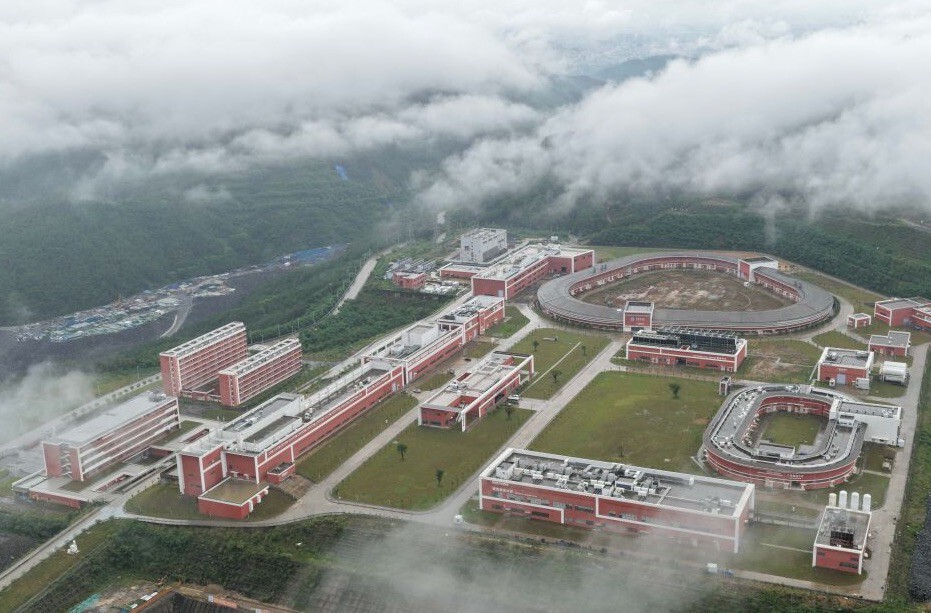
Unlike a simple linear accelerator, HIAF distributes work across three major systems: a superconducting linear accelerator that provides intense beams in continuous or pulsed mode, a synchrotron that accumulates ions and pushes them to higher energies, and a storage ring that allows for precise experiments.
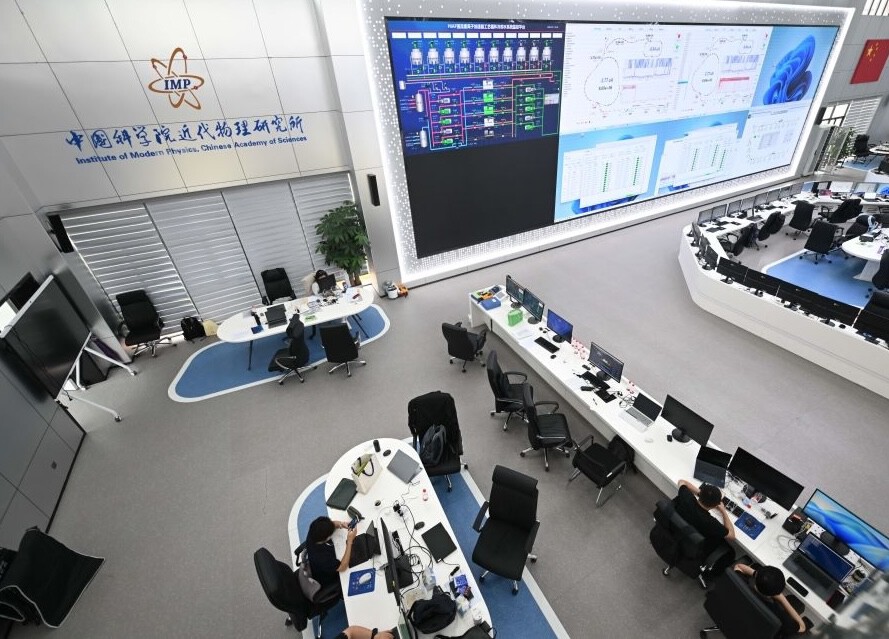
Key Components and Capabilities
This multi-system architecture enables researchers to study matter under extreme conditions. The facility's ability to produce high-intensity heavy ion beams opens up new possibilities for understanding atomic nuclei and the fundamental forces that govern them.
- Superconducting linear accelerator: Provides intense, continuous, or pulsed beams.
- Synchrotron: Accumulates ions and accelerates them to higher energies.
- Storage ring: Enables precision experiments and extended observation.
- Two-kilometer beamline: Allows for a wide range of experimental setups.
- High intensity: Achieves beam intensities challenging to match elsewhere.
Why the HIAF Matters Beyond Nuclear Physics
The HIAF is not just a tool for studying atoms. Its capabilities have implications for materials science, medicine, and even energy research. For instance, heavy ion beams can be used to simulate radiation damage in materials, helping develop more resilient components for nuclear reactors and spacecraft.
In medicine, heavy ion therapy is an emerging cancer treatment that precisely targets tumors while sparing healthy tissue. Facilities like HIAF can contribute to research in this field, potentially leading to improved therapies.
Applications in Materials Science and Medicine
Researchers can use HIAF to test how materials behave under extreme radiation, which is crucial for designing safer nuclear systems. Additionally, the facility's beams can produce isotopes for medical imaging and treatment, advancing nuclear medicine.
| Application Area | Potential Impact |
|---|---|
| Nuclear Physics | Study of exotic nuclei and fundamental forces |
| Materials Science | Development of radiation-resistant materials |
| Medicine | Advancements in heavy ion therapy and isotope production |
| Energy | Research on nuclear waste transmutation and safer reactors |
Global Context and Competition
China's HIAF joins a select group of heavy ion facilities worldwide, including the Facility for Rare Isotope Beams (FRIB) in the United States and the GSI Helmholtz Centre in Germany. The HIAF's high intensity and advanced systems position it as a competitive tool for international research. Context on how this played out before sits in China's HIAF Heavy Ion Accelerator Starts Test Operation. A companion piece, China's New Carbon Fiber Lines Challenge US and Japan Dominance, approaches the same subject from another angle.
This development underscores China's growing investment in basic science and its ambition to lead in nuclear physics. The facility is expected to attract collaborations from around the world, fostering scientific exchange. The background to this story is set out in Strange Particle Accelerator Signal May Reveal Universe's Origin. A related thread runs through Science: latest articles.
What to Watch Next
As HIAF begins test operation, the scientific community will be watching for its first experimental results. These will demonstrate the facility's capabilities and may lead to breakthroughs in our understanding of matter. Earlier coverage in China's New Tantalum Alloy Withstands 2,400°C Loads shows how the argument developed. A closer look at the same subject appears in China's New Naval Monster: The Semi-Submersible Crane That Sinks to Work.
Furthermore, the knowledge gained from HIAF could inform the design of future accelerators, including next-generation facilities for particle physics and nuclear research. Anyone following the wider picture can start with The Physics of Perfect Pizza: A Scientist's Quest for the Ideal Slice. The same theme surfaces in Roman Color-Changing Glass Recreated After 1,600 Years, which takes a different angle.
FAQ
What is the HIAF heavy ion accelerator?
The HIAF is a large-scale research facility in Huizhou, China, designed to accelerate heavy ions to high energies and intensities for a wide range of scientific experiments.
When did HIAF start operating?
HIAF passed its acceptance review on July 21 and entered test operation for scientific research. Construction began in 2018, and the first beam was produced in October 2025.
What research will HIAF support?
Research at HIAF will cover nuclear physics, materials science, medicine, and energy, including studies of exotic nuclei, radiation-resistant materials, and heavy ion therapy.
How does HIAF compare to other facilities?
HIAF is among the world's leading heavy ion accelerators, alongside FRIB in the US and GSI in Germany, with high intensity and advanced systems that enable unique experiments.







