

You can patch a tire at home with a plug or a proper patch kit, provided the puncture is in the tread, is no bigger than about 6 mm, and the tire still holds pressure. Anything in the sidewall, any cut, or any damage from driving flat needs a replacement, not a repair.
This guide walks through the safe sequence: assess the damage, get the wheel off the ground, plug or patch the hole, and check the repair before you trust it at speed. It also covers the tools worth owning and the mistakes that quietly ruin tires.
Find Original Home Decor sparking conversation at Grand Goldman Shop.


Step by step
1. Confirm the puncture is repairable
Find the object, mark the spot with chalk, and check whether it sits in the central tread area rather than the shoulder or sidewall. Sidewall damage cannot be safely repaired because that zone flexes constantly and carries the tire's load. If the tire has been driven flat, has a bulge, or the hole is larger than a pencil, stop here and fit the spare.
2. Loosen the wheel bolts before lifting
Crack the wheel bolts a quarter turn while the car is still on the ground, because they are much harder to shift once the wheel spins freely. Then raise the car on a jack at the manufacturer's lifting point and place an axle stand under a solid chassis member. Never put any part of your body under a car held only by a jack.
3. Remove the object and ream the hole
Pull out the screw or nail with pliers and note its angle, since you will need to follow the same path. Push the reaming tool through the hole with a twisting motion to clean the edges and roughen the inner walls so the repair material bonds. Keep the reamer slightly wet with the kit's lubricant if one is supplied.
4. Insert a plug or fit an internal patch
For a roadside plug, thread the strip through the insertion needle, centre it on the hole, and push it in until roughly a centimetre of the strip remains outside. For a proper internal patch, break the bead, clean the inner liner with the buffer, apply vulcanising cement, and press the patch on firmly. Patches applied from inside are the more durable repair and the one tire shops use.
5. Trim, inflate and check for leaks
Cut the protruding plug flush with the tread and reinflate to the pressure on the door pillar sticker, not the maximum on the sidewall. Spray soapy water over the repair and watch for bubbles, then wait ten minutes and recheck the pressure with a gauge. A slow drop means the repair has failed and the tire should come off.
6. Refit the wheel and re-torque
Refit the wheel, hand-tighten the bolts in a star pattern, lower the car, then torque them to spec with a wrench. Recheck the pressure after your first drive, since a warm tire reads higher than a cold one. If the repair was a roadside plug, have a shop inspect it and convert to an internal patch when convenient.
Gear that makes this easier
| Product | What it solves | Best for | Verdict |
|---|---|---|---|
| Slime Deluxe Tire Plug Kit | Complete roadside plugging set with tools and strips | Keeping in the boot for emergencies | Solid all-in-one starter kit |
| Stop & Go Tire Repair Kit | Reaming, plugging and insertion tools in a case | Frequent DIY repairs | Durable tools, good value |
| TEKTON Torque Wrench | Correct bolt torque after refitting the wheel | Anyone doing their own wheel work | Essential safety tool |
| Viair Portable Air Compressor | Reinflating the tire without a garage visit | Roadside and home use | Reliable, faster than budget pumps |
| AstroAI Digital Tire Pressure Gauge | Verifying the repair holds pressure | Checking before and after every repair | Cheap insurance, accurate enough |
| Tire Repair Patch Kit with Vulcanizing Cement | Internal patch repair for a lasting fix | Home mechanics with a bead breaker | Best long-term repair |

Slime Deluxe Tire Plug Kit
This suits drivers who want one box in the boot that covers a simple nail puncture without any other purchases. Skip it if you already own quality reaming and insertion tools, since the included handles are the weakest part of the set.
Stop & Go Tire Repair Kit
It fits people who repair tires often and want tools that survive repeated use rather than a one-off emergency kit. Casual owners may find it more kit than they need, and a basic plug set will do the same job for occasional punctures.

TEKTON Torque Wrench
Anyone removing and refitting their own wheels should own one, because guessing bolt torque risks stretched studs or a loose wheel. Skip it only if you always have a shop refit the wheel after your repair.
Viair Portable Air Compressor
This is for drivers who want to inflate a repaired tire on the spot and keep pressures correct between services. It is overkill for someone who only ever tops up at a fuel station with a working air machine.
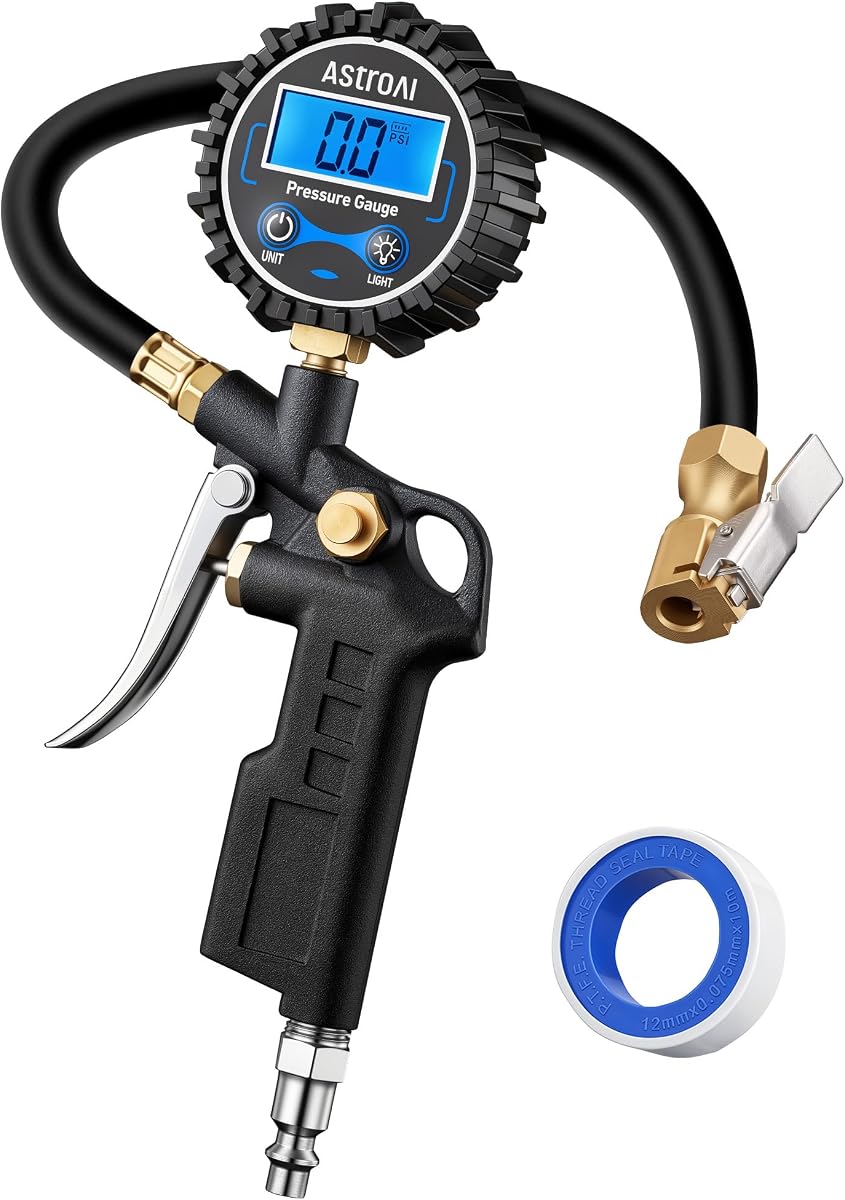
AstroAI Digital Tire Pressure Gauge
A gauge like this suits every driver, because the repair is only finished once you know the pressure is holding. Skip it if you already carry a trusted gauge in the glovebox.
Tire Repair Patch Kit with Vulcanizing Cement
This suits home mechanics prepared to break the bead and patch from the inside for a repair that lasts the tire's life. Skip it if you cannot safely seat a bead afterwards, since an unseated tire is a job for a shop.
Common mistakes
- Plugging a sidewall or shoulder puncture, which is never safe regardless of how small the hole looks.
- Using too much force with the reamer and enlarging the hole beyond what the plug can seal.
- Skipping the soapy water test and discovering the leak at motorway speed instead.
- Refitting wheel bolts with a wheel brace and guessing the torque rather than using a wrench.
- Treating a plug as permanent and never having the tire inspected internally.
FAQ
Can I patch a tire myself without removing it from the car?
Yes, with a plug kit you can repair a tread puncture with the wheel still fitted, provided you can reach the hole. An internal patch, however, requires removing the wheel and breaking the bead, which is best done off the car.
How long does a plugged tire last?
A properly installed plug in the tread can hold for thousands of kilometres, but it is not a permanent repair in the way an internal patch is. Have a shop check it and convert to a patch when you can.
Is it legal to repair a tire in Spain?
Repairs are permitted if the tire meets the repairability criteria in the relevant standard, which excludes sidewall damage and large or multiple punctures. A shop should confirm the tire is still roadworthy after any repair.
Can I repair the same tire twice?
Two well-separated tread punctures can sometimes be repaired, but they must not overlap or sit too close together. Multiple repairs close together weaken the structure, and a shop should make the call.
Does tire sealant work instead of a patch?
Sealant can get you home from a small tread puncture, but it is a temporary measure and can complicate a proper repair later. It also does nothing for sidewall damage or larger cuts.
What pressure should I set after a repair?
Use the pressure listed on the door pillar or fuel flap sticker, measured cold. The maximum pressure moulded on the sidewall is a limit, not a target.
A tire repair is a short job when the damage is in the tread and you have the right tools, and a replacement when it is not. Assess honestly, work safely under the car, and test the repair before trusting it on a fast road.
As an Amazon Associate we earn from qualifying purchases.
Related guides
More step-by-step guides on this topic are collected in the car archive.







