

The Roman head found in Mexico at the Tecaxic-Calixtlahuaca site remains one of the most puzzling archaeological discoveries in the Americas. Unearthed 90 years ago, this terracotta sculpture challenges our understanding of pre-Columbian contact and raises tantalizing questions about ancient global connections.
The Discovery: A Roman Head in a Pre-Columbian Tomb
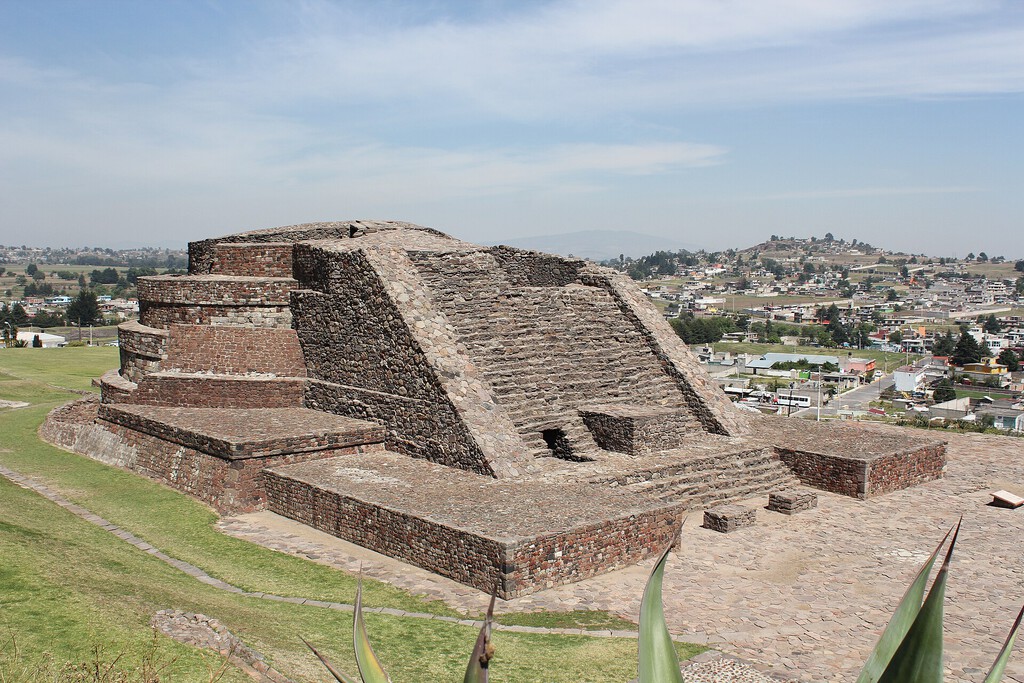
In 1933, archaeologist José García Payón led an excavation at Tecaxic-Calixtlahuaca, located about 65 kilometers northwest of Mexico City. The team was studying a pre-Columbian burial when they uncovered an unusual funerary offering.
Find Original Home Decor sparking conversation at Grand Goldman Shop.

Alongside typical items like gold, copper, turquoise, rock crystal, and ceramics, they found something entirely out of place: a terracotta head. This sculpture, with its bearded face and classical features, looked unmistakably Roman.
Why the Roman Head Is So Controversial
The bust depicts a bearded man with a hairstyle and facial features that align with Roman artistic traditions, not those of pre-Hispanic Mesoamerica. Such an object in a pre-Columbian context is highly anomalous.
Some experts date the piece to the 2nd or 3rd century AD, which would place its creation well before any known European contact with the Americas. The question is obvious: how did a Roman artifact end up in a Mexican tomb?
Key Takeaways
- The Roman head was found in 1933 at Tecaxic-Calixtlahuaca, Mexico, in a pre-Columbian burial.
- The terracotta sculpture exhibits classical Roman features, including a beard and specific hairstyle.
- Experts suggest it may date to the 2nd or 3rd century AD, predating Columbus by over a millennium.
- The discovery challenges conventional timelines of transatlantic contact.
- Scholars remain divided on whether the head is genuine evidence of ancient contact or an intrusion.
Theories on How the Roman Head Reached Mexico
Ancient Transatlantic Contact
One hypothesis posits that Roman ships, perhaps blown off course, reached the Americas and traded or lost items. However, no other Roman artifacts have been found in secure pre-Columbian contexts to support this.
Post-Conquest Intrusion
Another theory suggests the head was introduced after the Spanish conquest, perhaps as a curiosity or religious object. Yet its discovery within an undisturbed tomb argues against this.
Misidentification or Forgery
Some scholars question whether the head is genuinely Roman or even ancient. It could be a local imitation or a later addition, though no definitive proof exists.
Comparison of Roman Head with Other Artifacts
| Artifact | Origin | Date | Context |
|---|---|---|---|
| Roman terracotta head | Roman Empire | 2nd-3rd century AD (proposed) | Pre-Columbian tomb, Mexico |
| Roman coins in Americas | Roman Empire | Various | Often found in post-conquest contexts |
| Pre-Columbian figurines | Mesoamerica | Various | Local burials and offerings |
What the Roman Head Means for Archaeology
If authentic, the Roman head would rewrite the history of transatlantic contact. It would imply that Romans, or at least Roman goods, reached the Americas long before Columbus. The background to this story is set out in Mystery of the Headless Roman Bronze Statue of Pamplona. A related thread runs through Trending: latest articles.
However, mainstream archaeology remains skeptical due to the lack of corroborating evidence. The burden of proof lies on those who claim ancient contact. Earlier coverage in Ancient Iliad Found in Roman Tomb in Egypt shows how the argument developed. A closer look at the same subject appears in Roma's Hidden Gem: 2nd-Century Roman Domus Found Under High School.
For now, the Tecaxic-Calixtlahuaca head stands as an intriguing anomaly, a reminder that history is rarely straightforward. Anyone following the wider picture can start with Roman Legion Belt Origins: Unexpected Find in Asturias Cave. The same theme surfaces in Roman Head Found in Mexico: A 90-Year-Old Archaeological Enigma, which takes a different angle.
FAQ
What is the Roman head found in Mexico?
It is a terracotta sculpture resembling a bearded Roman man, discovered in 1933 in a pre-Columbian tomb at Tecaxic-Calixtlahuaca, Mexico. It is considered an archaeological enigma because it predates Columbus.
How old is the Roman head?
Some experts date it to the 2nd or 3rd century AD, based on stylistic analysis. However, its age is debated due to the lack of stratigraphic context.
Did Romans visit the Americas?
There is no conclusive evidence that Romans reached the Americas. The Roman head is the only purported artifact, and its authenticity and origin remain controversial.
What do mainstream archaeologists think of the Roman head?
Most archaeologists are skeptical, viewing it as an anomaly possibly introduced after the conquest or as a misidentified object. They require more evidence before accepting pre-Columbian transatlantic contact.
The Roman head found in Mexico continues to fascinate both scholars and the public. As with many archaeological mysteries, only further research can resolve the debate. Meanwhile, the allure of ancient global connections persists, drawing comparisons to other enigmatic finds like the Madrid: A Magnet for Millionaires and Latin American Wealth, which highlights how wealth and cultural exchange have long shaped transatlantic narratives.
For those intrigued by how ancient artifacts influence modern perceptions, the story of the Roman head offers a compelling case. It underscores the importance of context and the need for rigorous analysis in archaeology. Just as the Madrid: A Magnet for Millionaires and Latin American Wealth illustrates the flow of influence between continents, this discovery challenges us to reconsider the boundaries of ancient connectivity.
Ultimately, the Roman head serves as a reminder that history is full of surprises. Whether it is a genuine relic of ancient contact or a later intrusion, it invites us to question what we know about the past. As researchers continue to study such anomalies, the Madrid: A Magnet for Millionaires and Latin American Wealth offers a modern parallel to how cities and cultures attract diverse influences over time.







