

Nuclear electric propulsion is the focus of the European Space Agency's (ESA) Rocketroll project, which aims to develop advanced propulsion systems for deep space missions. The project recently announced its first results, marking a significant step toward enabling spacecraft to travel farther and more efficiently than ever before.
As space agencies like NASA and ESA set their sights on destinations beyond low Earth orbit, the limitations of current propulsion technologies become increasingly apparent. Solar power diminishes with distance from the Sun, and chemical rockets require impractical amounts of fuel for long-duration missions. Nuclear electric propulsion offers a promising alternative.
Find Original Home Decor sparking conversation at Grand Goldman Shop.

Why Nuclear Electric Propulsion?
Traditional spacecraft rely on solar panels or chemical rockets. Solar power is effective near Earth but becomes inefficient in deep space or during long lunar nights, which last 14 Earth days. Chemical propulsion, while powerful, requires massive amounts of fuel for long journeys, making resupply impractical.
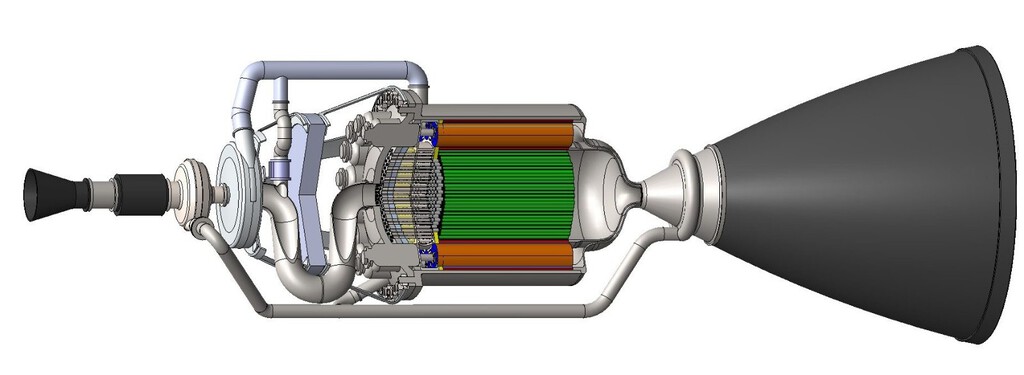
Nuclear electric propulsion (NEP) uses a nuclear reactor to generate electricity, which then powers an ion drive. This system offers high efficiency and can operate independently of sunlight, enabling missions to the outer planets and beyond.
Rocketroll Project Overview
ESA's Rocketroll project, short for "Nuclear Electric Propulsion for Space Exploration," was initiated to study the feasibility of NEP for European space missions. The agency commissioned three independent consortia to design approaches for integrating NEP into spacecraft. This parallel approach encourages diverse ideas and robust solutions.
The project's first results, announced recently, outline potential architectures and identify key technological challenges. While other agencies like NASA have explored nuclear propulsion, Rocketroll represents Europe's first dedicated effort in this area.
How Nuclear Electric Propulsion Works
NEP systems consist of a nuclear reactor that generates heat, which is converted into electricity via a power conversion system. This electricity powers an ion thruster, which accelerates propellant (typically a noble gas like xenon) to produce thrust. The process is highly efficient, with exhaust velocities much higher than those of chemical rockets.
Unlike nuclear thermal propulsion, which uses a reactor to directly heat propellant, NEP separates the power generation from the thrust production. This allows for greater flexibility and potentially higher efficiency, albeit with lower thrust levels.
Comparison of Propulsion Technologies
| Technology | Specific Impulse (s) | Thrust | Power Source | Applications |
|---|---|---|---|---|
| Chemical | 300-450 | High | Chemical energy | Launch, short missions |
| Solar Electric | 1000-3000 | Low | Solar panels | Near-Earth, inner planets |
| Nuclear Electric | 5000-10000 | Low to medium | Nuclear reactor | Deep space, cargo |
| Nuclear Thermal | 800-1000 | High | Nuclear reactor | Fast crewed missions |
Key Takeaways from Rocketroll's First Results
- ESA has completed initial studies on nuclear electric propulsion through the Rocketroll project.
- Three consortia independently designed NEP approaches, ensuring diverse perspectives.
- NEP offers high efficiency and independence from solar power, ideal for deep space missions.
- Europe had previously studied nuclear thermal propulsion (Alumni project), but Rocketroll focuses on electric propulsion.
- Challenges remain, including reactor safety, heat management, and regulatory approval.
Challenges and Considerations
While NEP promises significant advantages, several hurdles must be overcome. Nuclear reactors in space raise safety concerns, particularly regarding launch accidents and re-entry. International regulations and public perception also play a role.
Thermal management is another challenge: reactors generate substantial heat that must be dissipated in the vacuum of space. Additionally, the mass of the reactor and shielding adds to spacecraft weight, impacting launch requirements.
The Future of European Space Propulsion
Rocketroll is a research project, but its outcomes could shape Europe's long-term space strategy. If NEP proves viable, it could enable ambitious missions such as sample returns from the outer planets or crewed expeditions to Mars. The background to this story is set out in Spain's First Electric Propulsion Satellite Reaches Orbit. A related thread runs through Heating Systems: How to Develop Your Home Setup. Earlier coverage in Hantavirus Outbreak on Cruise Ship: Lessons for Space Exploration shows how the argument developed.
ESA's investment in NEP aligns with global trends. NASA is developing its own nuclear propulsion systems, and China has announced plans for nuclear-powered spacecraft. Collaboration and competition will drive innovation in this field. A closer look at the same subject appears in Arts and Humanities Essential for Understanding Space Exploration. Anyone following the wider picture can start with Arts and Humanities Play Key Role in Space Exploration. The same theme surfaces in Science: latest articles, which takes a different angle.
As Rocketroll progresses, expect further announcements on design selections and technology demonstrations. The project's success will depend on overcoming technical and regulatory challenges, but the potential rewards are immense. Context on how this played out before sits in Metajets Laser Propulsion: Fuel-Free Space Travel Breakthrough. A companion piece, ESA's Rosalind Franklin Rover Set for 2028 Mars Launch, approaches the same subject from another angle.
FAQ
What is nuclear electric propulsion?
Nuclear electric propulsion (NEP) is a technology that uses a nuclear reactor to generate electricity, which powers an ion thruster to propel spacecraft. It offers high efficiency and can operate far from the Sun.
Why is ESA pursuing nuclear electric propulsion?
ESA aims to enable deep space missions that are impractical with current technologies. NEP provides the necessary power and efficiency for long-duration flights to the Moon, Mars, and beyond.
How does Rocketroll differ from other nuclear propulsion projects?
Rocketroll focuses specifically on nuclear electric propulsion, whereas other projects like ESA's Alumni studied nuclear thermal propulsion. NEP separates power generation from thrust, allowing for greater efficiency.
What are the main challenges for NEP?
Key challenges include reactor safety, heat dissipation, regulatory approval, and public acceptance. Overcoming these is essential for the successful deployment of NEP systems.
Browse the Shop
 Acacia frida deluxe solid wood bed frame |
Bedroom bench |
Bed chest drawers |
Lingerie dresser |
Frame base |
Mirror with jewelry storage |
30 Bathroom Vanity |
Memory foam queen mattress |
Mattresses for back pain |
Nightstand set of 2 |
Grand Goldman Shop |
Civil Lawyer
Deutschland Trikot WM 2026







